The Farm
Five acres. Five hundred chickens. Two hundred students.
The farm is not a metaphor. It is a working farm where students raise animals, nurture flowers, and harvest their work. Why? Because kids grow the way living things do. Slow. Tended. Rooted.
Programs & Animals.
Every animal on this farm has a name, a role, and a student who looks after them. Here is the cast.
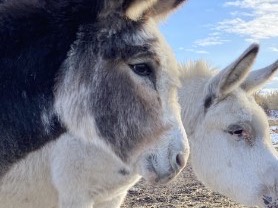
Pixie & Violet
Our rescue donkeys. On a permanent diet they keep ruining. Whine when separated, which is how the neighborhood found out we have donkeys.
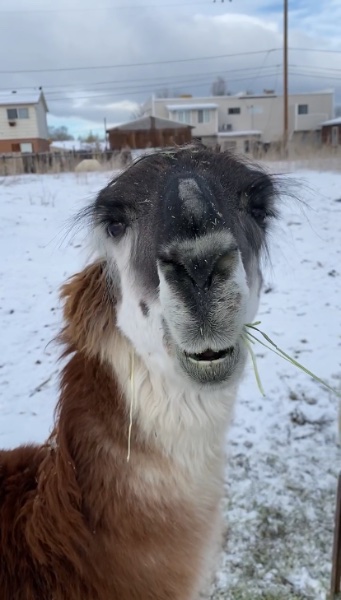
Cusco
Our llama and self-appointed farm bouncer. Cranky. Will spit. Earned it.
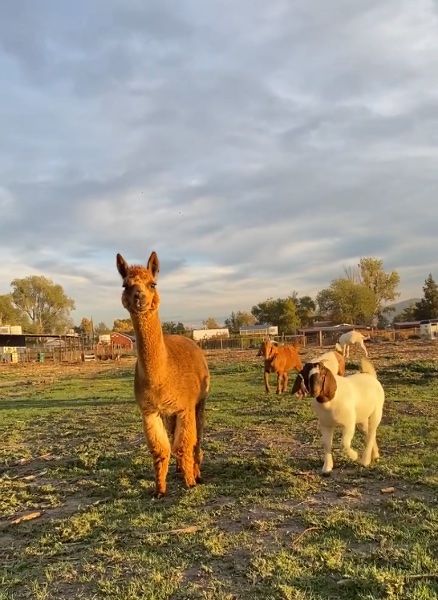
Laney
Our alpaca. Shy. The opposite energy of Cusco.
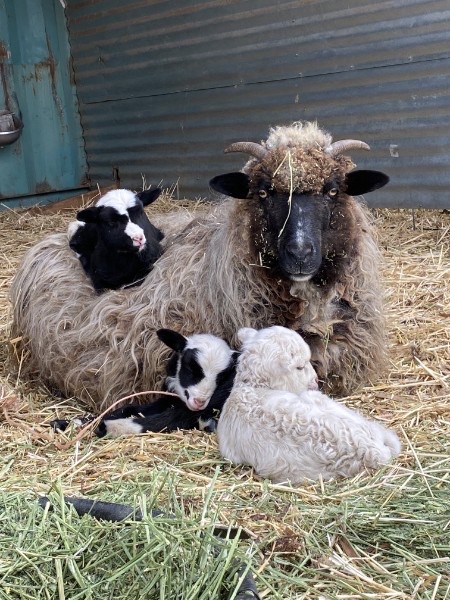
The Churro flock
A breed-recovery flock. Part of a national program to bring back the Navajo-Churro sheep. Bred this year for the first time.
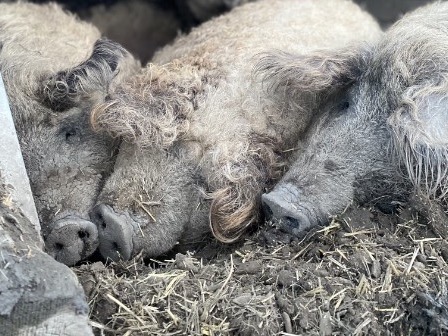
Mangalitsa mama & piglets
Three curly-haired piglets, a rare breed. Mama runs the show. Students learn pasture-based animal husbandry on her schedule.
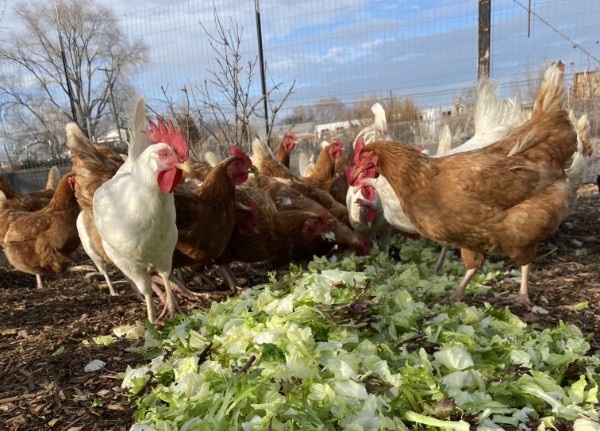
The chickens
Five hundred laying hens. Chicks come from us and a hatchery in Idaho. Sarah, a junior, runs egg collection on Tuesdays. Five hundred chickens, one student, one bucket.
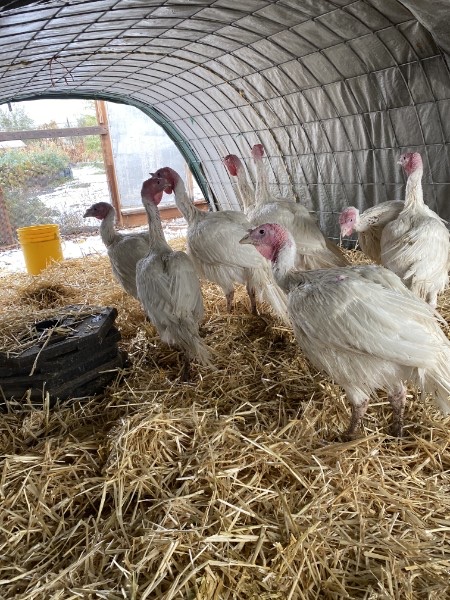
The 4H turkeys
Raised by students for Thanksgiving. The students do the planning, feeding, and health checks.
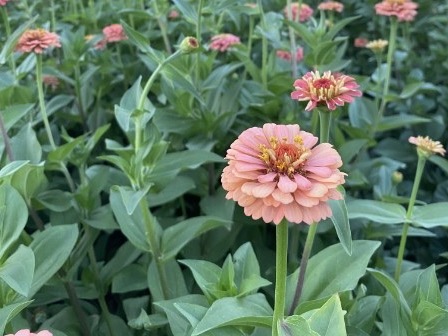
The flowers
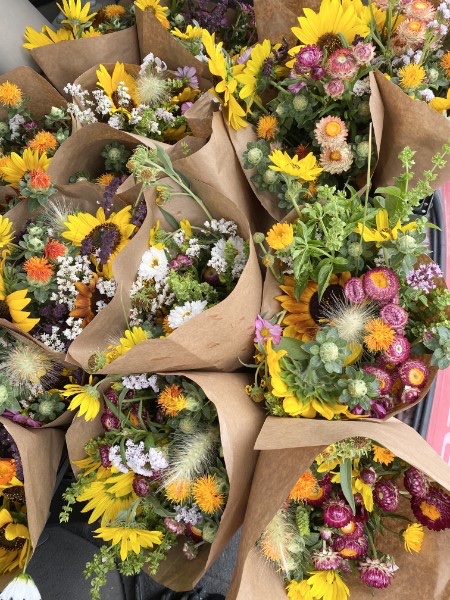
Twenty thousand stems sold last year through Picklinq, up from five thousand the year before. Dahlias, sunflowers, zinnias. Maria seeded the dahlia trays this week.
Career & Technical Education (CTE)
The farm is one of the most impactful ways for students to earn CTE credit. Real animals, real customers, real deadlines. Students apply classroom learning to the daily work of a commercial operation and walk out of high school with hands-on experience that builds toward a career.
Farm-based CTE activities include:
- Animal husbandry. Daily care, breeding cycles, basic veterinary observation.
- Floral production. Seeding, harvesting, post-harvest handling, sales through Picklinq.
- Egg production. Flock health, collection, grading, packaging, delivery routing.
- 4-H turkey program. A full year of student-led poultry operations.
- Farm operations. Equipment, fencing, irrigation, soil management.
Events at the farm.
The farm opens to the public a few times a year. Free to walk in. Family-friendly. The easiest way to meet Roots without booking a tour.
Upcoming public farm events appear here (CMS-bound to the Events collection). Until the next date is set, follow the school's Instagram or subscribe to
SMS alerts.
Want a reminder when the next one is announced? Follow the school's Instagram or subscribe to SMS alerts.
Farm Partners.
Roots does not run the farm alone. These partners buy product, share expertise, place students in apprenticeships, or open their fields to our kids.
Picklinq
Distributes Roots-grown flowers to florists across the Wasatch Front. Twenty thousand stems last year.
Visit ↗4-H Utah
Our turkey program runs through Utah 4-H. Students learn project management, recordkeeping, and animal science.
Visit ↗Navajo-Churro Sheep Association
Our Churro flock is enrolled in the national breed-recovery program. We bred for the first time this year.
Visit ↗Want to partner? Email farm@rootshigh.org. We are always open to relationships that put students in front of real working professionals.
Where to find Roots eggs & flowers.
Roots sells through partners, not direct. Here's where to find what the students grow.
- Roots eggs: at Liberty Heights Fresh, 1290 South 1100 East, Salt Lake City.
- Roots flowers: through Picklinq, distributed to florists across the Wasatch Front. Ask your local florist if they carry them.
- Roots floral arrangements: students design and assemble arrangements for weddings, funerals, and events. Pickup at the farm only. Request a quote →
Book a floral arrangement.
Roots floral students design and build arrangements from stems grown on the farm. Weddings. Funerals. Birthdays. Anniversaries. Anything that needs flowers and an event date. Tell us what the day is, what you want it to feel like, and we send back a quote.
- Pickup onlyAt the farm, 1301 Cesar Chavez Dr, West Valley City. Students do not deliver.
- PaymentVenmo, or card with a 3% processing fee.
- Lead timeTwo weeks minimum. Weddings and large events, four to six.
Volunteer at the farm.
Outside hands keep the farm strong. Tell us how you'd like to help. Every interest form gets read and a real person follows up.
Long-term · Weekend animal care
Weekend animal care.
Animals don't take weekends off. Trained volunteers cover Saturday and Sunday shifts to spread the work while covering the animals' needs. Work includes feeding, watering, cleaning, basic health checks, and general farm maintenance.
Volunteers work unsupervised, so reliability is critical. We train every accepted volunteer before they start.
Right fit if: you can commit to a recurring weekend shift, you show up when you say you will, and you're comfortable around large animals.
One-time · Group volunteer day
Group volunteer days.
Bring your team to the farm for a day of real work that supports a real school. Corporate teams, civic clubs, and faith groups have built fence, mucked stalls, harvested the flower beds, prepped Spring Fest, and stocked the pantry.
Group days pair labor with a donation to the farm program. This combination is what keeps the farm running for our students.
Right fit if: ten to thirty people, half a day, and your group is excited to support a school worth supporting.
Both interest forms route to farm@rootshigh.org. Staff reach out within a week to confirm fit.
Support the farm.
Feed for the chickens. Vet bills for the donkeys. Fencing, fuel, project costs for the 4-H turkeys. Public school dollars do not cover this. Donors do.
Farm-specific giving options appear here (CMS-bound to the Campaigns collection). For school-wide funds (Neighbor Fund, Pantry, Sub for Santa), see the
Donate page.
Looking for school-wide funds (Neighbor Fund, Pantry, Sub for Santa)? Those live on the Donate page.
Farm tours & open houses.
School tours include the farm. A current student walks every visiting family past the chickens, the donkeys, and the flower beds. Book a school tour →
Public farm open houses run twice a year, in the spring and the fall. Watch the school's Instagram or subscribe to SMS alerts for dates.
Group visits, field trips, and corporate volunteer days happen by arrangement. Email farm@rootshigh.org with the size of your group, what you would like to see, and the dates that work.